The first time, she was gone for five days. This time, she was almost gone forever.
Princess Leia — who is commonly known as Leia — is a German Shorthaired Pointer (GSP). Like most GSPs, she is energetic, strong willed, and obsessed with chasing anything that moves.
In mid-October 2021, just two days after the stitches from her spaying surgery were removed, she darted out the door, caught the scent of something, and took off into the thick woods that surround our house. She was missing for five days and had lost five pounds, which was about 10% of her body weight. (There’s much more to this lost-and-found story, but I’ll save that for another time.)
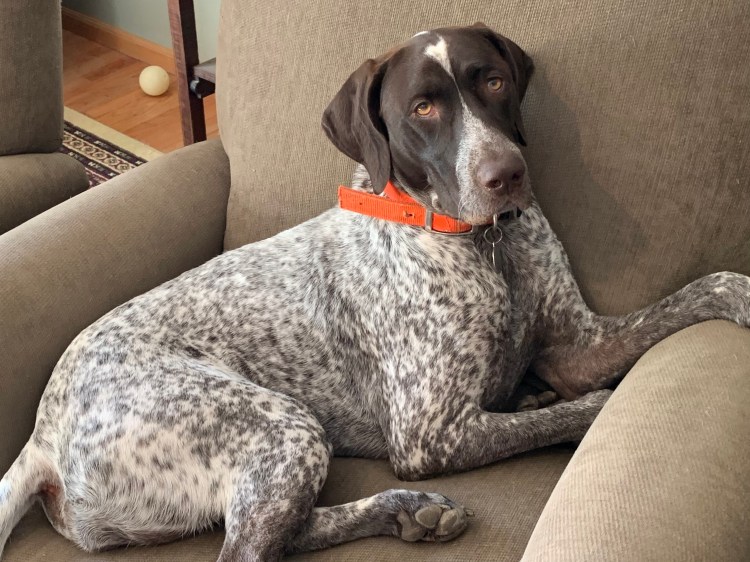
Determined to prevent this from happening again, we implemented several systems and procedures. Unfortunately, in the early evening of Friday, July 15, 2022, I failed to follow protocol, and Leia slipped out of my grasp. Again, she took off into the woods. Thankfully, we had purchased a Cube GPS tracker that attaches to her collar, so I opened the app on my phone and immediately began searching for her.
Temperatures that day had topped out close to 100 degrees, and the humidity was high. After about an hour of following her on the app, I finally found her — lying in the grass panting heavily. I tried to get her up and out of the woods, but she seemed unable to walk. At that point, it was after 9 p.m. and starting to get dark, but my husband arrived just in time to find us and carry Leia out of the trees. We assumed she’d gotten overheated, so we gave her fresh water and put her in a cool shower. After that, she seemed OK although a little shaky as she walked to her bed and rolled around to dry off.
Around 10 p.m., I put her in her crate for the night. Before getting into bed himself, my husband decided to get her out of the crate to check on her. She couldn’t stand up. I jumped out of bed, and we immediately headed to the Emergency Animal Clinic of Topeka. It’s about a 45 minute drive from our house, and by the time we got there, Leia couldn’t hold her head up. We believed then that she didn’t have much time, and we were right. As it turns out, she had suffered a heatstroke.
The staff got to work immediately, but they warned us that Leia might not make it. For the next 60 or so hours, they attended to her around the clock, administering multiple units of plasma, dextrose, IV fluids, and countless medications.
Because the emergency clinic only operates when veterinarians are typically closed, Leia had to be discharged on Monday morning, yet she was still in need of intensive care and specialized testing, such as blood coagulation times, that many veterinarians aren’t equipped to provide. I took her to a veterinary hospital in Kansas City, where I was informed that only about 50% of dogs with heatstroke survive. The doctor also mentioned that, even if she did survive, she would likely have permanent kidney damage.
Leia stayed at the Kansas City hospital for about 36 hours until she was stable enough to be transferred to our local veterinarian for continued hospitalization and treatment. The indicators of kidney function — which include blood urea nitrogen, creatinine, and phosphorus — had continued to worsen during her time in Kansas City and were, by this time, off-the-charts bad. When we delivered her to our veterinarian, Dr. Jeff Van Petten of Meriden Animal Hospital, he told us that, based on these numbers, there wasn’t much hope for her survival. Nevertheless, he promised to do everything he could to save her. That was Tuesday, July 19.
For the next four days, we visited Leia at Meriden Animal Hospital. Everyone there was so kind and caring, taking the time to get her out of her crate, attaching her IV to a pole, and giving us an exam room to be with her. Taking her out to potty was a two-person job due to the IV, and they helped with that too. You might think me crazy, but I put my hands on Leia and prayed for her kidneys to be healed every chance I could. We kept up those prayers at home day and night and were joined by friends, family, and members of our church in praying for Leia’s healing.
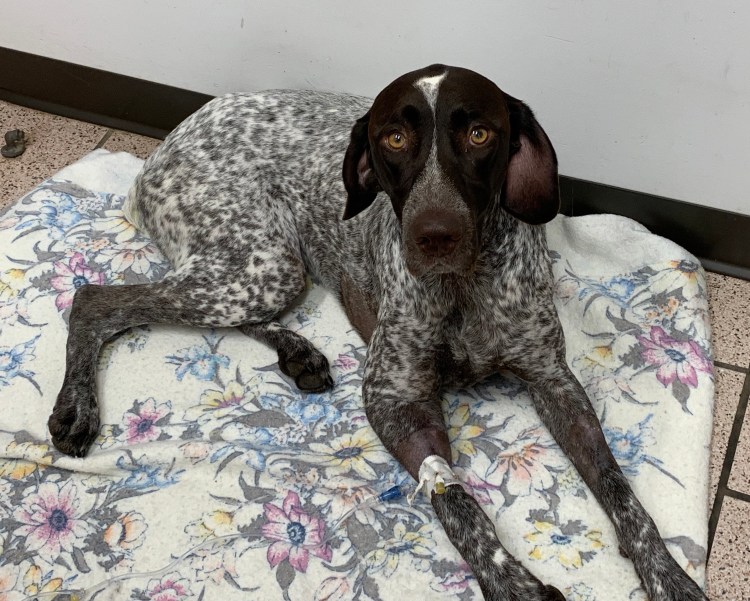
Each day, her numbers slowly improved. On Saturday afternoon, it was decided that Leia could go home for the weekend and return on Monday for a blood test. If her numbers weren’t improved, she’d have to return to the hospital and restart IV fluids. By Monday, 10 days after her heatstroke, she had lost about 12 pounds (22% of her body weight). All the kidney function numbers were much better but still well above normal range, so while she was able to continue rehabbing at home, regular blood testing would have to continue.
At that point, our top priority was getting her to eat, something she’d had almost no interest in during her hospitalization. If you’ve ever had a pet with failing kidneys, you’ll recognize the pattern — interest in some foods for a while but slowly decreasing the foods they’ll eat until all interest in food is gone. Leia followed that same pattern. She had no interest in either the dry or canned food we’d been feeding her prior to the heatstroke, but she would eat rotisserie chicken and one other type of canned food. After a few days, though, she lost interest in the canned food. We moved on to another canned food and had success with that for a few days until she also began rejecting it. The situation didn’t look good, but we continued to pray.
Near the end of July, a few days before Leia’s next blood test, she suddenly took a few bites of her dry food. The next day, she took a few more bites. Things were starting to look up, and, although still above normal, her kidney function numbers were steadily improving.
Miraculous recovery
Just a few weeks later, on August 17, all five of the commonly accepted kidney function measures were well within the normal range. She’s also back to eating anything and everything and has gained almost all the weight she lost. According to our veterinarian, who recently told us he believed her likelihood of survival was only about 10%, it appears that Leia’s kidneys were not permanently damaged.
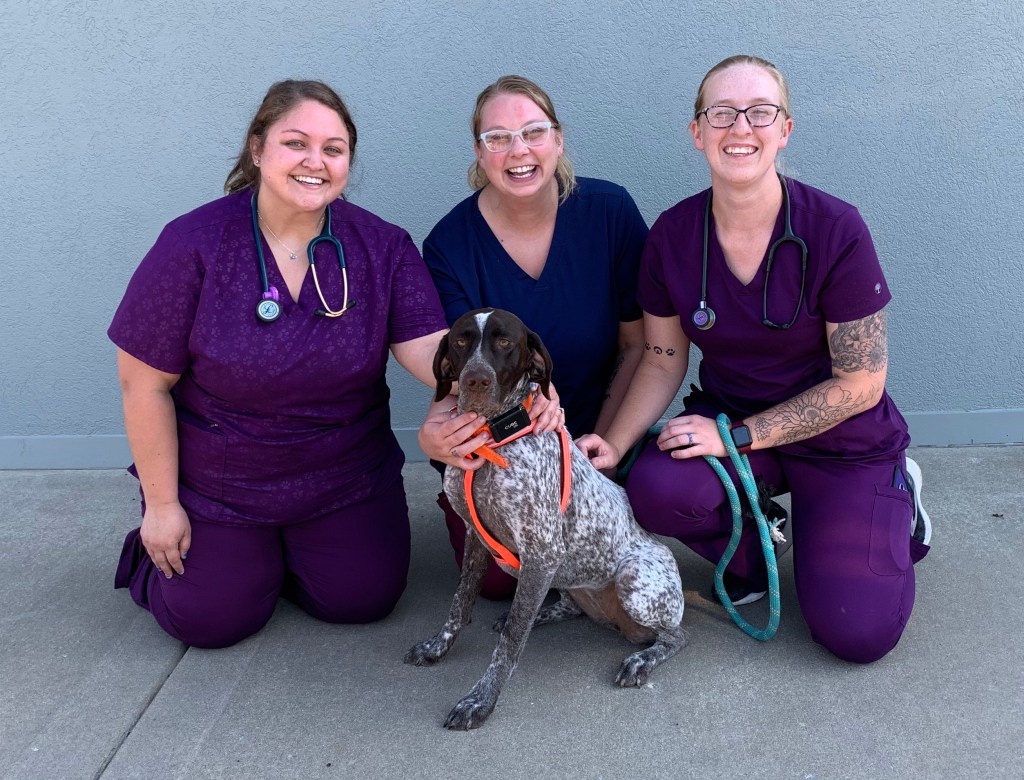
However, like humans, she is now much more sensitive and could easily get overheated and suffer another stroke. So doggy daycare is most likely a thing of the past for her. And it remains to be seen if she’ll ever be able to do much bird hunting, which is something she loves more than anything in the world. But none of us is up for another ordeal like this one.
I tell this lengthy tale to share several messages. Here are the five most important to me.
- Please take some time to learn about heatstroke — prevention, symptoms, and what to do in the event your pet suffers one. I’m no expert, but this information from the American Animal Hospital Association seems pretty helpful.
- Consider investing in pet insurance. If you don’t have it or don’t think it’s worth it, think about whether you can afford thousands — maybe even tens of thousands — of dollars to save your beloved pet’s life. If you can’t afford that, there’s a chance you could have to euthanize your pet due to finances. For Leia, who was young and had been exceptionally healthy, we could not have made that decision. You may be able to get pet insurance at a discount through your employer, or simply search online for providers. Like all insurance, the various options can be confusing, so it may take a little time to find one that seems like a good fit for your needs, but don’t wait too long because you never know when you will need it. This comparison from NerdWallet may help.
- If your pet is diagnosed with kidney failure for any reason, ask your vet about some possible, and treatable, contributing factors. Staff at the Kansas City hospital found a tick on Leia, so they started an antibiotic as a precaution against lyme disease, which would contribute to poor kidney function. That made me wonder if there could have been other possible contributors, and my research led me to canine leptospirosis. Although typical vaccinations include the most common strains of leptospirosis, there are multiple strains, and dogs can be infected by drinking contaminated water. Because she would have been thirsty, Leia surely would have drunk from any water source she found that evening in the woods. I discussed this with our veterinarian, who verified that the antibiotic she was on was the recommended treatment for leptospirosis, and I’m convinced that treating her for that bacterial infection aided her recovery. So if your pet has kidney issues, ask your vet about testing for lyme disease, leptospirosis, and anything else that could be contributing to poor kidney function.
- Emergency animal clinics provide a valuable service that we desperately need. In preparing to write this post, I looked at the Facebook page for the Emergency Animal Clinic of Topeka (EACT) and was disappointed to see some negative reviews, mostly related to cost. Yes, their service is expensive, but they are there when no one else is — except for the vet clinic at Kansas State University and the two or three hospitals in Kansas City, all of which are equally or more expensive and much further away. I don’t think Leia would have survived if we’d had to drive to Manhattan or Kansas City the night of her heatstroke. In addition, the EACT has expenses they have to cover. Besides the obvious rent, utilities, staff salaries, etc., they have to pay for the products they use to treat their patients. In Leia’s case, there was plasma, dextrose, IV fluids, and a bunch of other stuff that had to be administered to save her life. If we don’t pay for those products and their urgent administration, the EACT and others like them won’t be there when we need them. Sadly, the EACT has had to switch to curbside-only service for the safety of their staff, who, as I understand it, have had some frightening run-ins with distraught pet parents. I’m guessing at least some of these incidents were related to the inability to afford the treatment. If you’re ever in this situation, please try to be kind. And it bears repeating here: get pet insurance, so you never have to be in this situation.
- God still works miracles. There is no doubt that the teams at EACT and Meriden Animal Hospital saved Leia’s life, and I will always be grateful for everything they did for her and for us. But I also firmly believe that God heard our constant prayers and helped her body respond to the treatments. After all, she had a 90% chance of dying (which I’m glad our vet didn’t mention at the time) and a very high chance of permanent damage. As full of life as Leia is, I find it hard to believe she managed to survive without miraculous assistance straight from heaven. You can have that too. If you need prayer, leave a comment below, and I’ll add you to my list. You can also request prayer through your church of choice, but if you don’t have one, there are many trustworthy options online. I’m fond of the Billy Graham Evangelistic Association, which has a 24/7 prayer line staffed by some amazing people. Just call 888-388-2683.
 Shelley Urban